When you purchase portable power gear via links on Sine & Cell, we may earn an affiliate commission at no added expense to you. How Sine & Cell earns affiliate commissions
A solar generator for home backup combines a rechargeable battery, inverter, and charge controller in one unit. When paired with solar panels, it stores energy to run appliances without grid power. Most home-focused models available now use LiFePO4 (lithium iron phosphate) chemistry, which delivers thousands of charge cycles and remains stable in varied temperatures.
The choice between models comes down to three practical factors: total battery capacity, continuous power output, and how you plan to recharge it. A smaller unit (around 1 kWh) handles phones, laptops, and small appliances during brief outages. A larger system (3+ kWh) can power refrigerators, space heaters, or multiple devices simultaneously and sustain them for hours or days.
Understanding capacity and power ratings
Battery capacity is measured in watt-hours (Wh). A 1,024 Wh (roughly 1 kWh) unit can theoretically run a 100-watt device for about 10 hours—but real-world use depends on what you plug in. Most systems also list continuous power (the steady load they handle) and surge power (peak demand for a few seconds, like when a refrigerator compressor starts).
For example, a unit rated 1,800W continuous and 3,600W surge means it can steadily power appliances up to 1,800 watts, with brief spikes to 3,600 watts. Many home appliances draw 500–2,000 watts: microwaves, electric kettles, space heaters, and air conditioners fall at the higher end. A refrigerator typically uses 100–800 watts depending on compressor duty.
Runtime depends on what you run. A 1 kWh battery powering a 500-watt load gives roughly 2 hours before depletion. The same battery running a 100-watt lamp lasts 10 hours. Recharge time matters if you're cycling daily: units that accept solar input alongside wall charging can top up faster during daylight.
Small systems: 1 kWh capacity
These are portable, practical for moving between rooms or taking camping. They suit brief outages, emergency device charging, and supplementing critical loads like a WiFi router or medical equipment during a blackout. Runtime for essential appliances is measured in hours, not days. Most offer 100W USB charging from wall outlets in under 2 hours.
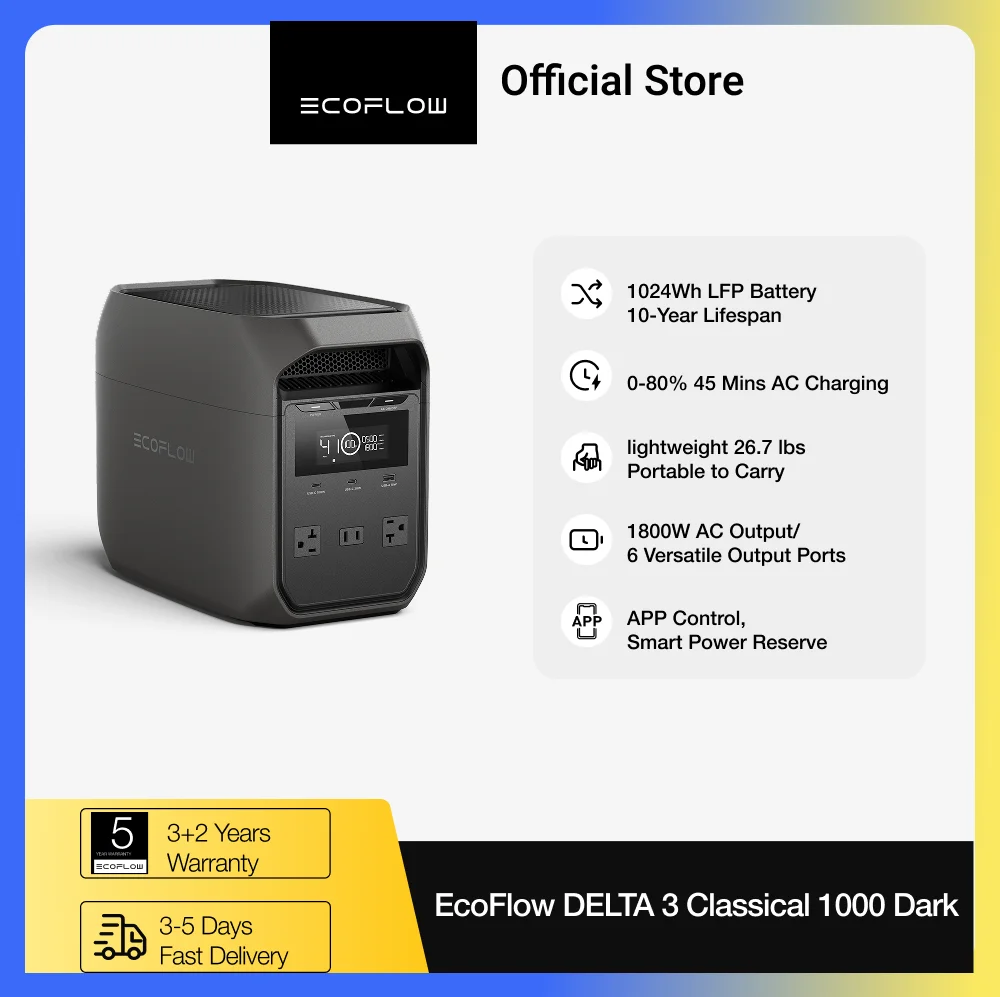
The ECOFLOW DELTA 3 (1,024 Wh) is listed at 1,800W continuous, 3,600W surge. ECOFLOW advertises 100W USB charging speed, though actual speed depends on the specific USB port and charger used. Verify the exact charging time for your use case at checkout, as advertised speeds reflect optimal conditions.
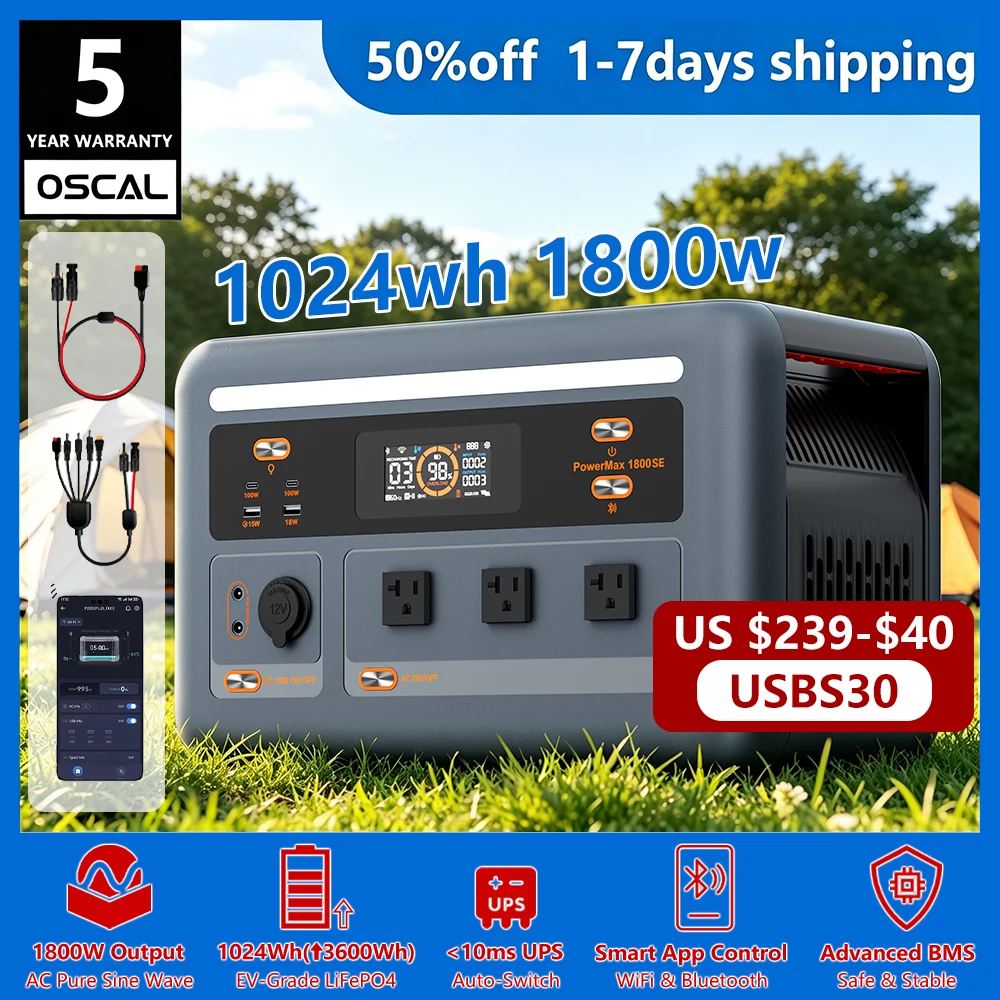
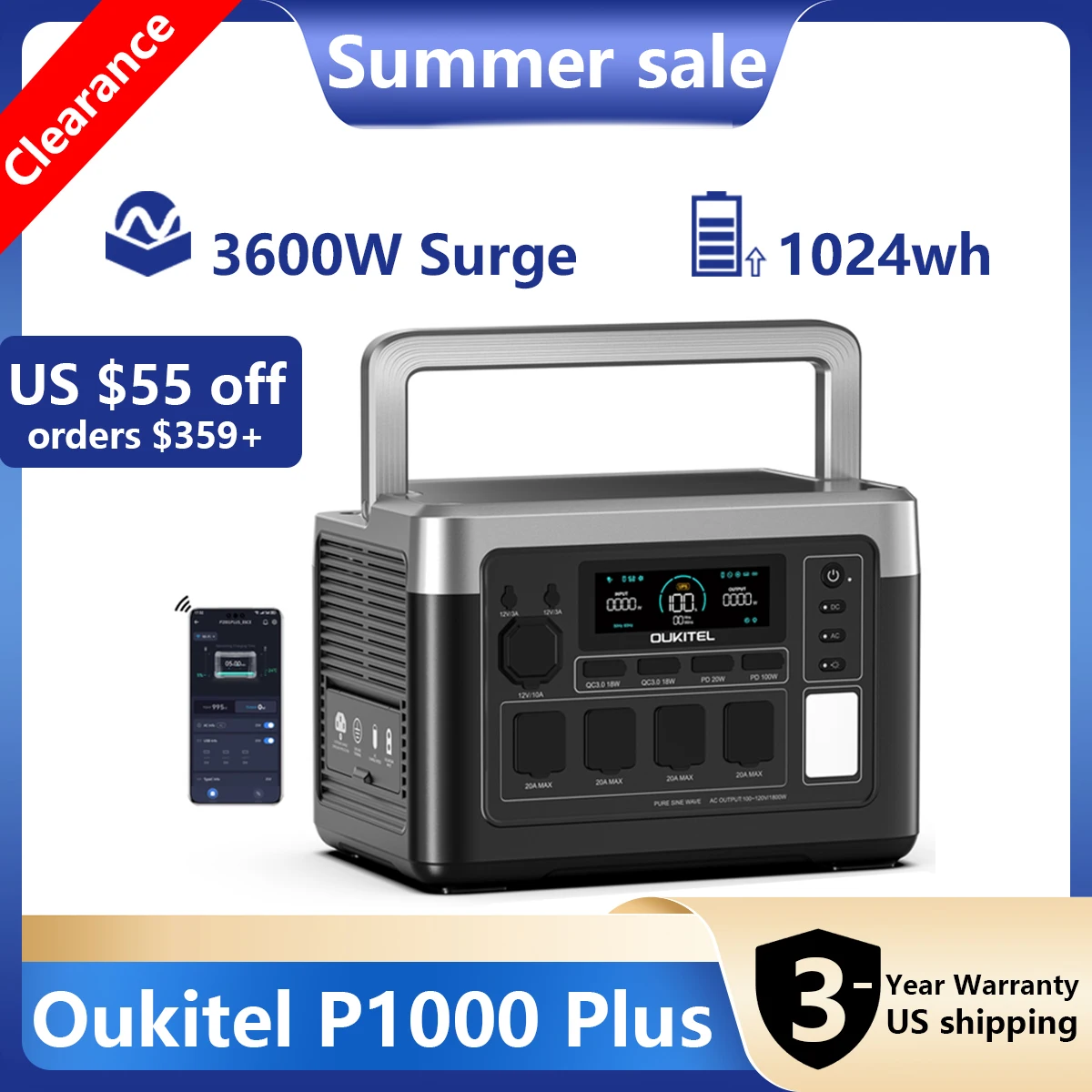
The OSCAL PowerMax 1800se and OUKITEL P1000 PLUS both advertise 1,024 Wh capacity, 1,800W continuous, and 3,600W surge. Both claim 1-hour fast charge from wall power. These units are similarly sized and priced; the deciding factor is usually warranty support and app features. Verify current pricing and shipping to your location before purchase, as rates fluctuate and availability varies by region.
Larger systems: 3+ kWh capacity
A 3.6 kWh system can power a modest home for several hours or operate high-draw appliances (heaters, AC units) for 30 minutes to an hour. These are less portable but more practical for extended outages. They work best when charged by solar panels during the day and discharged at night, creating a daily cycle.

The OSCAL PowerMax 6000 offers 3,600 Wh capacity, 6,000W continuous, and 9,000W surge. It advertises 240V/120V output and bidirectional inverter capability (meaning it can feed power back to the grid if connected to a compatible system, though this requires additional infrastructure and local utility approval). The listed 1.96-hour charge time is under optimal conditions; actual recharge depends on the power source and cable quality. Ask the seller whether this time includes both AC wall charging and solar input, and confirm it matches your planned charging setup.
Charging and solar compatibility
Most units charge from a wall outlet (fastest), car DC input, or solar panels (slowest but free once panels are installed). Solar input requires compatible panel connectors—commonly XT60i or MC4. Before purchasing, check whether the generator includes a solar charge cable or if you need to buy one separately.

Solar charge cables are sold separately and come in various lengths. Verify the connector type matches your panels and generator before ordering. Many sellers list these as 12 AWG or similar gauge; confirm the exact connector (XT60i, MC4, or proprietary) on both the generator and your panels.
Choosing the right size
For occasional outages under 8 hours: A 1 kWh unit with 1,800W output handles essentials like refrigeration, lighting, and phone charging if you prioritize loads and avoid simultaneous high-draw appliances.
For extended outages or daily cycling: A 3.6 kWh system with 6,000W continuous power can sustain a small household, especially when paired with solar panels for daytime recharge. Runtime is longer, and you can run higher-wattage appliances.
For guaranteed coverage: Consider your home's actual peak load. List the appliances you'd run during an outage and their power draw (check labels or manuals), then add them up. If you'd run a 2,000W space heater and 500W refrigerator simultaneously, you need at least 2,500W continuous capacity.
Important limitations and verification
Battery capacity is rated at standard conditions (typically 25°C or 77°F). Cold weather reduces usable capacity; hot climates can affect longevity. Check the manufacturer's manual for your specific model to understand performance in your climate.
Surge capacity (the brief peak power spike) is not the same as continuous output. If you run multiple appliances that total more than the continuous rating, the unit may shut down to protect itself. This is normal protection but means you cannot count on surge power for prolonged operation.
Solar panel inclusion and output depend on the exact listing. Some units are sold with panels; others require purchasing them separately. Verify what's included in your order before checking out.
Warranty, customer support, and return policies vary by seller and brand. These units often ship from overseas; confirm return eligibility and support availability in your region before purchase.
LiFePO4 batteries last longer than older lithium-ion chemistries (4,000+ cycles versus 500–800), but they still degrade over time. Expect 70–80% capacity retention after 5–10 years of regular use, depending on climate and charging habits.
```Evaluation is based on published specifications and seller listings. No physical or hands-on testing was conducted; unlisted specifications may still be available from the seller.